L'Italia nel gruppo
al secondo posto
|
The Transparency International (TI) Global Corruption
Barometer 2004 is a public opinion survey that was carried out
in 64 countries among more than 50,000 people to assess perceptions
about corruption, experience of corruption, and expectations concerning
corruption levels in the future. It compares petty and grand corruption
(and compares corruption with other problems in society), evaluates
the extent to which public and private institutions are considered
corrupt, determines where the public believes corruption’s
impact is greatest, and asks about bribery and prospects for future
levels of corruption.
TI believes it is important to assess what the public thinks about
corruption, since public support for anti-corruption efforts –
and for the leaders and institutions that espouse them –
is critical to their success. By asking the general public their
views, the Global Corruption Barometer is a unique measure of
the impact of anti-corruption efforts at country level, which,
when combined, reflect global public opinion on corruption and
its significance for people’s lives. Transparency International
maintains the view that public opinion on, and experience of,
corruption is a crucial indicator of the extent to which corruption
is successfully being fought around the world.
|
The TI Global Corruption Barometer
complements TI’s other main global indicators on corruption,
the Corruption Perceptions Index and the Bribe Payers Index,
by polling public, rather than expert, opinion on corruption.
The Global Corruption Barometer can be used to raise awareness
of the extent and impact of corruption, as judged by the general
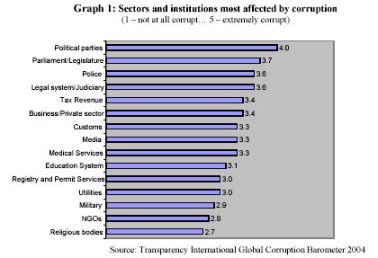
public. Its question targeted at levels of corruption in institutions/sectors,
for instance, can point to those areas with poor reputations
that may be ripe for reform.
TI, who commissioned the Global Corruption Barometer from Gallup
International, first ran the Global Corruption Barometer in
2003. Country coverage was expanded considerably in 2004, from
48 to 64 countries, and TI will continue to increase the number
of countries polled for the Barometer.
Over time, TI expects the survey to convey important trends
in the way the publics around the world
regard corruption in their countries. For the full questionnaire
of the TI Global Corruption Barometer 2004, see Annex I of this
report. For a full listing of the countries covered in the survey,
see Annex II. For an overview of the methodology of the Global
Corruption Barometer 2004, see Annex III.
Continua >>>>
|
|


